For many folks, range day consists of showing up with their favorite peacemaker, pinning up a target, loading mags with freedom seeds, and banging out rounds in hopes of shooting a target worthy of showing their friends. While I believe that all practice has some level of benefit, if you are serious about making improvements in weapon accuracy and proficiency, then you may find greater benefit by taking a more intentional approach to training. This involves evaluating the things you want to improve or need to work on, then creating a training plan to ensure you are working on the things that will help you reach your goals.
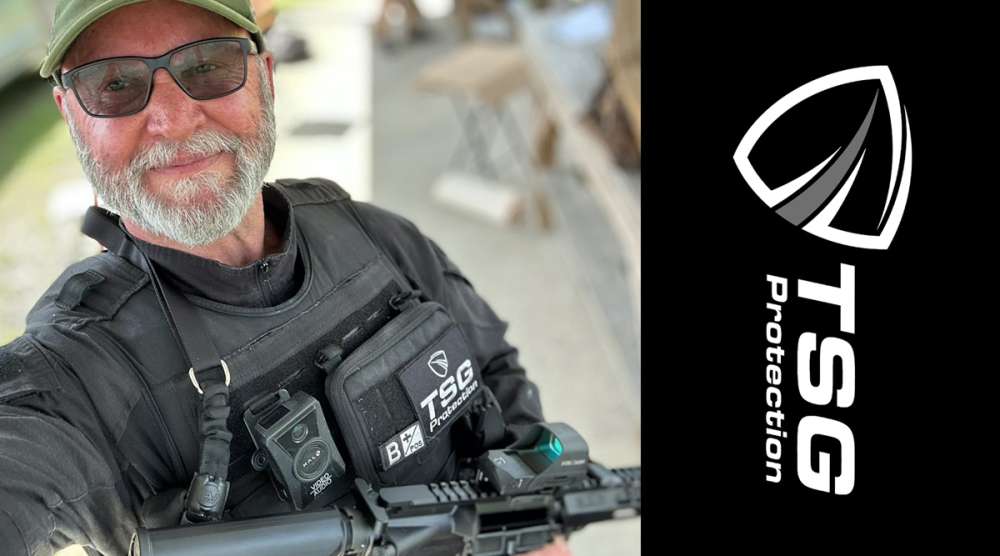
I got my first gun when I was 10 years old and have owned guns ever since. I’m a former law enforcement officer and SWAT operator. I currently own a private security agency and work as an armed security officer, and I am a certified law enforcement firearms instructor. Despite all that, bad habits can creep into my shooting if I am not intentional with my training.
I still train the basics often, both at the range with live ammunition and at home with dry-firing drills. This is how I ensure my habits are fundamentally sound, and when that is on point, I know I am safe, accurate, and proficient. From there, I know I am ready to train advanced skills and tactics.
These are the five training rules I follow to ensure I develop and maintain good habits. Following these rules also ensures that I will constantly improve, while avoiding the slow creep of bad habits due to complacency and laziness.
- Practice Before Practice. I learned two important things during 2020 and the COVID debacle. First, when I took hydroxychloroquine, my covid symptoms were gone within 24 hours. The second important thing I learned was that dry fire training is an extremely effective method of learning and perfecting fundamental gun handling skills, which in turn improve accuracy.It was scientifically impossible for COVID to be contagious at any Costco or Walmart location, so they were open for business throughout 2020. Ranges, however, were deemed COVID death traps and, therefore, closed for months during the plandemic. The only available option for armed professionals to train was dry-fire training. I took advantage of that opportunity, and when I got back on the live-fire range months later, my skills had improved significantly. From that point forward, dry-fire training at home has become a staple element of my training regimen. On range days, I spend about 30 minutes at home dry-firing before I leave the house. I go through my safe gun handling drills, then practice drawing my weapon from the holster I will be using that day, coming to the high ready, pressing out, and acquiring a good sight picture. Next, I work on smoothing out my trigger pull until there is almost no perceptible movement in my sight picture while pulling the trigger. When it feels good, I get in my truck and head to the range. When I get there, those lessons are fresh, and my live-fire training is consistently better.
- Have a Training Plan. I train to be safe, accurate, and proficient with my weapon for work. I know the sites that I protect, the kinds of challenges and obstacles I face, and the tactical problems I need to solve. I am also aware of the areas I personally wish to improve. I design my training plan to address and resolve those issues or to prepare for potential scenarios. For instance, at one site, I have a 60-yard corridor I have to deal with, and in that corridor, there are three obstacles that potentially provide cover from incoming fire. If I have to advance down that corridor while engaging a threat in a gun battle, I will need four magazines for my pistol. That will allow me to engage, then do a tactical reload before I leave one point of cover to move to another. So I will set up a shooting course on the range that simulates that scenario, then drill the tactical elements of that engagement. I work on moving and shooting, shooting multiple targets, shooting partially obscured targets, doing tactical reloads behind cover, working and moving from cover, simulating weapon malfunctions while moving and engaging the threat, and so on. If I am struggling on one element, such as mag changes, I may break that down into smaller elements until I master those and find the safest and most effective way to accomplish my goal.It doesn’t need to be that complex, but having a plan will make your training time far more productive and will build your proficiency and confidence as a gunfighter.
- Do The Hard Stuff. Nobody really enjoys shooting with their support hand (weak side) or one-handed. And rarely does anybody get excited about training malfunction drills, reloading drills, or incapacitation drills. Same for anything at all that is humbling and a lot of awkward and challenging work to do. We all love to train the things we are best at, but it’s your weak points that provide your attacker with the advantage. They may not be as fun to train until you do enough reps to get good at it, and then it’s very gratifying doing the hard things well.I recommend training those lesser-used handling drills at home during dry-fire training, as it’s a convenient way to put in a lot of reps and develop good habits more quickly, which will turn the hard stuff into the fun stuff you will want to do all the time.
- Become A Safety Freak. Our brain manages information in a couple of different ways and that work is performed in different areas of the brain. Decision-making is a process where the brain gathers information, evaluates that information, makes a decision, and then acts on that decision. It can be a slower and more deliberate process, and mistakes can be made easily. Once we repeat a specific action exactly the same way many, many times with the same outcome, we catalogue that even in a different part of our brain that works without the need for intense focus and concious thought. When you dressed yourself this morning, for instance, you most likely put your clothes on in the identical way that you have been putting them on your entire adult life without consciously thinking about it. We commonly refer to those actions as habits.If we want to be safe with our weapons, and especially in a stressful situation, we must develop safe weapon-handling habits. Even if you know the weapon is not loaded, you still handle it as if it were. Develop a routine of how you unpack a weapon from your bag, make it safe, and check it to be sure it’s safe. Do it the same way every time, no matter how many times you pick up and set down that weapon. Every time you touch a weapon, follow that same process of checking it, making it safe, and checking it again. Do that over and over until you can’t stand to do one more rep, then do ten more just to be sure. Soon you will find yourself following your safety rules without even thinking about it. Under stress, you will do whatever you have consistently programmed into that part of your brain that stores habits, so train good safety habits constantly whenever you pick up a gun, and if you do, you have a much higher probability of being safe under pressure.
- Clean and Check Your Weapons and Mags After Every Use. We have all gotten lazy and put away a weapon after range day without cleaning it and checking it to ensure it is operating properly. In fact, I know guys who take it as a point of great pride and confidence in their chosen weapon that they never clean it and then boast that it hasn’t failed them yet! Yet…is the operative word. Why would anyone choose to neglect a mechanical tool that they use to protect themselves or others from a lethal threat is beyond me. Every time you pull the trigger and a live round is fired, realize that a significant explosion has just taken place in your hand, and the device that executed that process has endured significant stress. Things break, they get dirty from the environment and from firing ammunition, and they can get clogged up. Magazines can get dirty, and foreign objects can get inside, causing parts of the magazine to impede its operation.Every time I handle a weapon, I perform a simple visual inspection, and I work the action and trigger to ensure it is functioning properly. Every time I put rounds through a weapon, I clean and inspect it so I feel confident my weapon will perform as expected if I ever need it to save a life.